
Victor Valley paving and pavement care
Asphalt Paving in Victorville, CA
Driveways and lots built on a solid base, then sealed and maintained so heat, wind and cold nights do not tear them apart.
- No-charge site visit and measurement
- Line-item written proposal you approve first
- Base, drainage and thickness spelled out
What High Desert Weather Does to Asphalt
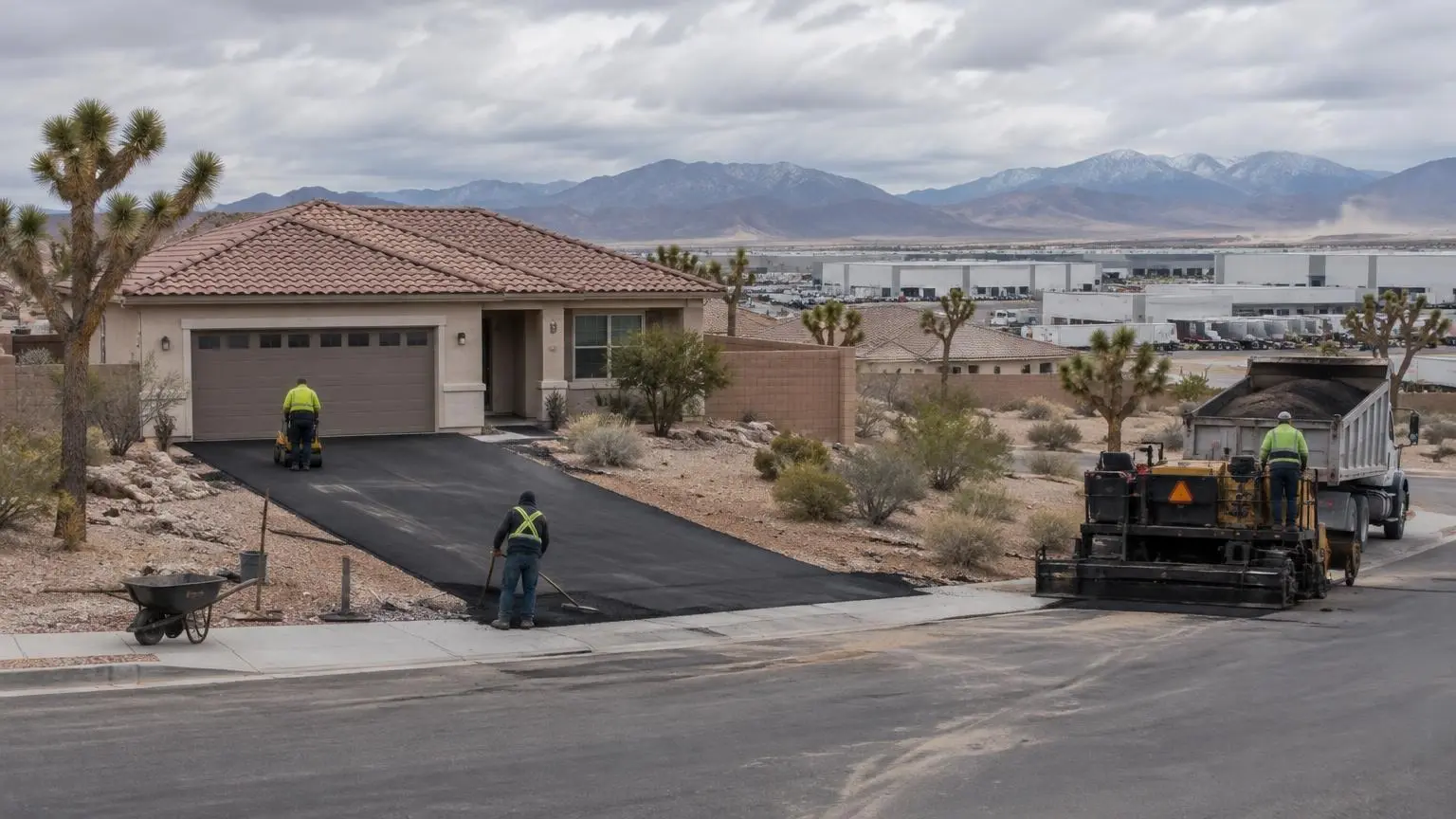
Asphalt paving in Victorville faces about 109 days a year at 90 degrees or hotter and 79 nights a year at or below freezing, according to the city's long-running weather records. July's average high is about 97.5 degrees and January's average low is about 33. That is a swing of more than 60 degrees between the hottest afternoons and the coldest mornings, and asphalt expands, softens, shrinks and stiffens through every one of those cycles. Add steady wind, sand and a dry climate that drains the life out of the binder, and you get pavement that ages faster than it would almost anywhere on the coast.
Heat: softening and drying out
On a summer afternoon, a black driveway gets much hotter than the air. Hot asphalt is soft, so tires, trailer jacks and even patio furniture leave dents in it. Over the years, heat and ultraviolet light also oxidize the binder that holds the stone together. The surface fades to gray, gets brittle and starts shedding small stones. Sealcoating every few years puts a protective layer on top that takes that damage instead.
Cold nights: cracking
With 79 freezing nights a year, Victorville gets real freeze-thaw cycles. Asphalt that was soft at 4 p.m. turns stiff by sunrise. Water from a winter storm or a sprinkler line gets into cracks, freezes and pushes them open. Cracks that are sealed before winter stay small; cracks that are left open grow into potholes.
Wind and sand
The city's records note that high wind events occur all year and especially in spring, sometimes knocking down power lines and kicking up dust storms. For paving, wind matters in three ways. Sand blown onto a prepared base or tack coat weakens the bond between layers, so we clean right before paving. Sealer needs calm air, or it picks up grit. And during the job, the Mojave Desert Air Quality Management District's fugitive dust rule bars dust that stays visible beyond the property line and requires reasonable precautions to keep dirt off public roads, so we water and sweep as we go.
A base that does not move
Residential asphalt is commonly built as 2 to 3 inches of compacted asphalt over 6 to 8 inches of compacted gravel base, according to HomeGuide's cost guide, with thicker sections for heavier vehicles and 4 inches or more for commercial lots. Victor Valley soil varies a lot from lot to lot. Loose, sandy ground needs to be compacted and sometimes stabilized; old fill around newer homes can settle; and hard caliche layers can make grading slow. We check the ground first and build the base for what we find.
Growth means traffic
Victorville grew from 14,220 people in 1980 to 134,810 in 2020. Much of the newer growth across the region is tied to logistics, and the Southern California Logistics Airport now occupies part of the former George Air Force Base. Trucks are a bigger part of local traffic than they used to be, and commercial lots, yards and entrances need heavier sections than they once did.
Who handles the street side
The City of Victorville requires an encroachment permit for work in the public right-of-way, applied for through the city's Citizen Access portal. Neighboring Apple Valley, Hesperia and Adelanto have their own processes, and San Bernardino County issues encroachment permits, including for driveway approaches, on county-maintained roads in unincorporated areas. If your project touches the apron or the street, we tell you who issues the permit before scheduling.
Where We Work
We work in Victorville, Apple Valley, Hesperia and Adelanto, plus Spring Valley Lake, Oak Hills, Phelan, Pinon Hills, Helendale, Oro Grande, El Mirage, Lucerne Valley and out to Barstow and Lenwood, with some mountain work in Wrightwood, Crestline and Lake Arrowhead. Conditions change a lot across that area. Phelan and Pinon Hills sit near or above 4,000 feet; Wrightwood is above 6,000 feet and averages about 62 inches of snow a year; Barstow and Helendale are lower and hotter. The permit authority changes too: four incorporated cities and towns plus San Bernardino County for the unincorporated communities. Each town page covers what applies there.
- Asphalt Paving in Victorville, CA
- Asphalt Paving in Apple Valley, CA
- Asphalt Paving in Hesperia, CA
- Asphalt Paving in Adelanto, CA
- Asphalt Paving in Spring Valley Lake, CA
- Asphalt Paving in Oak Hills, CA
- Asphalt Paving in Phelan, CA
- Asphalt Paving in Pinon Hills, CA
- Asphalt Paving in Mountain View Acres, CA
- Asphalt Paving in Helendale, CA
- Asphalt Paving in Oro Grande, CA
- Asphalt Paving in El Mirage, CA
- Asphalt Paving in Lucerne Valley, CA
- Asphalt Paving in Wrightwood, CA
- Asphalt Paving in Barstow, CA
- Asphalt Paving in Lenwood, CA
- Asphalt Paving in Hinkley, CA
- Asphalt Paving in Crestline, CA
- Asphalt Paving in Lake Arrowhead, CA
- Asphalt Paving in Running Springs, CA
Common Questions
What does asphalt paving cost in Victorville?
National cost guides put standard asphalt driveways at about $5 to $12 or more per square foot (HomeGuide) and asphalt parking lots at about $2 to $4.50 per square foot (HomeAdvisor). Removal of old pavement, extra base work and driveway approach work add to the total. We give you a written price after the site visit.
What is the difference between asphalt and paving?
Paving is the job of putting down a hard surface; asphalt is one of the materials used to do it. Concrete, pavers and chip seal are other paving materials. Asphalt is the most common choice for driveways and lots here because it costs less up front than concrete and is easy to repair and reseal.
How long does an asphalt driveway last in the High Desert?
Cost guides put asphalt driveway life at roughly 15 to 30 years. In Victorville, sun and heat push that toward the shorter end unless the driveway is sealed every few years and cracks are filled before winter.
Can you pave in the summer heat?
Yes. Hot weather actually helps asphalt compact, but fresh pavement stays soft longer. We plan when you can drive on it and keep heavy loads off it until it has cooled and firmed up.
What about paving in winter?
With 79 freezing nights a year, cold mornings are common. Asphalt needs warm enough ground to compact properly, so winter paving depends on the forecast. Crack sealing and repairs are often done in fall to get ahead of the cold.
Do I need a permit to repave my driveway?
Work on your own property usually does not, but changing the driveway approach, curb or sidewalk does. In Victorville that means a city encroachment permit through the Citizen Access portal; elsewhere it depends on whether you are in Apple Valley, Hesperia, Adelanto or unincorporated county land.
How soon can new asphalt be sealed?
HomeGuide recommends waiting 3 to 6 months after paving so the asphalt can cure before the first seal coat.
Why Homeowners Call Victorville Asphalt Paving Pros
Ground checked first
We probe and dig test spots before deciding between repair, overlay and replacement.
Section in writing
Base depth and compacted asphalt thickness are listed for each area of the job.
Weather timing
Paving and sealing are scheduled around heat, cold mornings and wind.
Permits sorted out
We identify whether the city, the town or the county handles any work at the street.
Paving and Maintenance Services
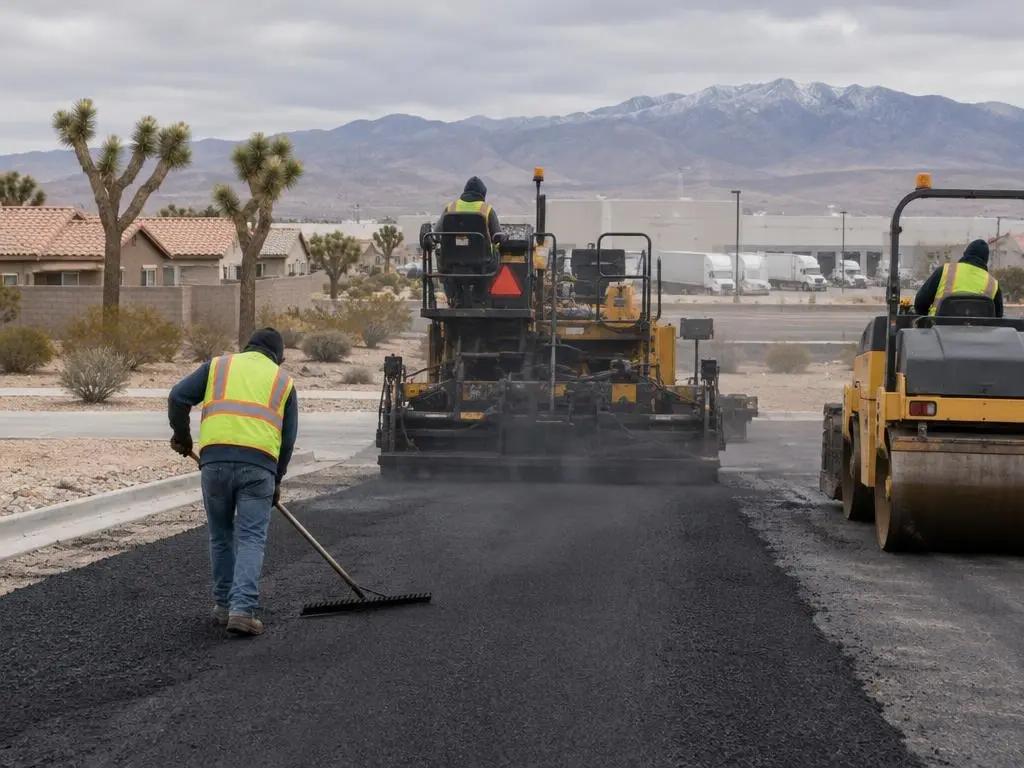
Six services that cover a driveway or lot from new construction through years of upkeep in High Desert conditions.
Commercial Parking Lots
Paving, rebuilding and overlaying lots for retail, industrial, church and multifamily properties.
Learn more →Request an Asphalt Paving Estimate
No-charge site visits in Victorville and across the Victor Valley.