
Residential driveways
Asphalt Driveways in Victorville, CA
Built from the subgrade up so the surface stays flat, drains and handles what you park on it.
- No-charge site visit and measurement
- Line-item written proposal you approve first
- Base, drainage and thickness spelled out
Most Driveway Problems Start Underneath
Asphalt driveways in Victorville usually fail from the bottom up. The surface shows the damage, cracks, dips, broken edges and potholes, but the cause is almost always a thin or poorly compacted base, soft spots in the ground, or water getting under the pavement. A new driveway is a chance to fix those causes, not just put fresh black on top of them.
Replace or repair?
HomeGuide's repair guide lays out a rule of thumb that matches what we see:
- Repair or resurface when damage covers less than about 25 to 30 percent of the surface, cracks are shallow and the base is stable.
- Replace when cracks cover 60 to 70 percent or more, there are multiple potholes, the driveway is 20 to 30 years old, or drainage problems keep coming back.
If your driveway falls in between, we show you both prices.
How a new driveway goes in
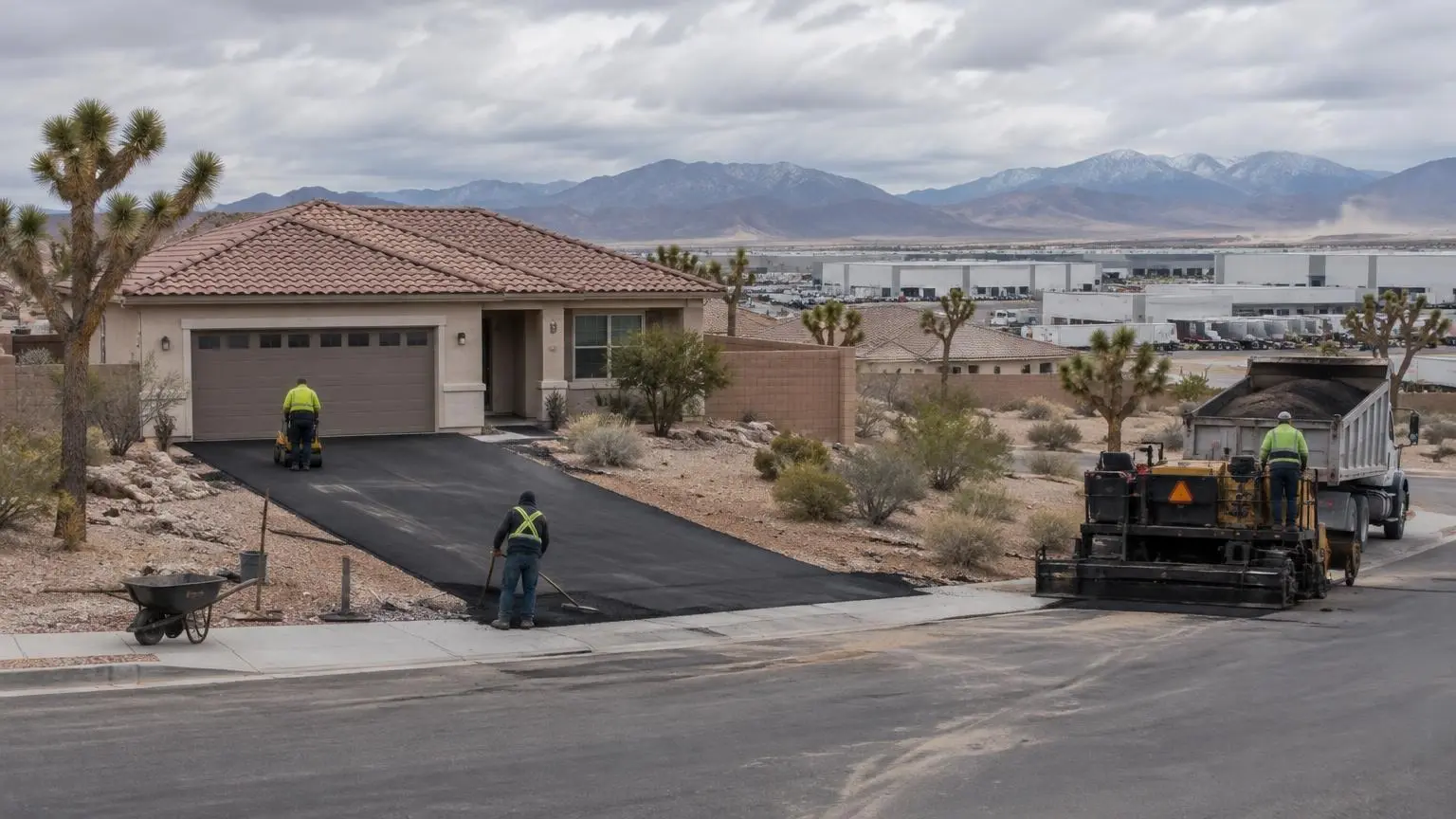
1. Old asphalt, concrete or gravel is removed and hauled away. 2. The subgrade is checked. Loose sand is compacted; soft or wet spots are dug out and replaced. 3. Aggregate base goes down in layers and is compacted to the depth in your proposal, usually 6 to 8 inches for a home driveway. 4. Grades are set so water runs to the street or a landscaped area, never toward the garage. 5. Hot asphalt is placed and rolled. Typical residential thickness is 2 to 3 inches compacted; we recommend 3 to 4 inches for RVs, trailers and work trucks. 6. Edges are finished and tied into the garage slab and apron.
Gravel and dirt driveways
Larger lots around the Victor Valley often start with a gravel or dirt driveway. Those wash out in storms and throw dust in the wind. Converting one to asphalt usually means regrading the old rock, adding new base and paving with a crown so water and sand run off the sides.
Widening and RV parking
Adding width beside an existing driveway for a third car, a boat or an RV is common. We saw-cut a clean joint, build the new section with a deeper base and tie it in flush.
First weeks with new asphalt
In the heat, new asphalt stays soft for a while. Avoid turning your wheels while parked, keep trailer jacks and motorcycle kickstands off it, and vary where you park. The first seal coat goes on after 3 to 6 months.
Driveway Work We Do
From a single-car replacement to a long rural drive.
Driveway replacement
Tear-out, new compacted base and new asphalt.
Gravel or dirt to asphalt
Existing material regraded, base added and paved with a crown.
Widening and extensions
Extra width or length tied in with a clean saw-cut joint.
RV and trailer pads
Heavier base and asphalt sized for the load.
New construction
Base built from raw ground and paved to the garage and apron.
Typical Asphalt Driveway Costs
| Driveway | Published range |
|---|---|
| Standard hot-mix driveway (HomeGuide) | $5 to $12+ per sq ft |
| 300 sq ft, single car (HomeGuide) | $1,500 to $3,600 |
| 500 sq ft (HomeGuide) | $2,500 to $6,000 |
| 800 sq ft (HomeGuide) | $4,000 to $9,600 |
| Porous asphalt (HomeGuide) | $7 to $15 per sq ft |
| Removal and replacement (Angi) | $8 to $15 per sq ft |
Published national ranges. HomeGuide notes some contractors set a $2,000 or higher minimum. Tear-out, soft-ground repair and approach work change the total. Your written proposal is the price.
Step by Step
1. Site visit
We measure, check the slope and drainage, and look at the apron.
2. Proposal
Each part of the job and its price is listed for your approval.
3. Base
Removal, subgrade repair and compacted base.
4. Paving
Hot asphalt placed, rolled and finished at the edges.
5. Hand-off
We explain when to drive on it and when to seal it.
Asphalt Driveways Questions
How much would a 20 by 20 asphalt driveway cost?
That is 400 square feet. HomeGuide's table puts it at about $2,000 to $4,800 for standard asphalt before any tear-out or base repair.
Is 2 inches of asphalt enough?
For cars on a well-built base, 2 to 3 inches compacted is common. For trucks, trailers or RVs, 3 to 4 inches over a deeper base is the better choice.
How long does a driveway replacement take?
Often one to three days: removal and base work first, then paving in a single day.
Can asphalt go over my cracked concrete driveway?
It can if the slabs are stable, but concrete joints tend to show through over time. Removing the concrete is usually the more lasting choice.
Why does my driveway have a dip near the garage?
Usually settlement of loose fill next to the foundation or water from a downspout soaking the base. We dig it out, compact new base and fix the drainage.
Asphalt Driveways Service Areas
- Asphalt Paving in Victorville, CA
- Asphalt Paving in Apple Valley, CA
- Asphalt Paving in Hesperia, CA
- Asphalt Paving in Adelanto, CA
- Asphalt Paving in Spring Valley Lake, CA
- Asphalt Paving in Oak Hills, CA
- Asphalt Paving in Phelan, CA
- Asphalt Paving in Pinon Hills, CA
- Asphalt Paving in Mountain View Acres, CA
- Asphalt Paving in Helendale, CA
- Asphalt Paving in Oro Grande, CA
- Asphalt Paving in El Mirage, CA
- Asphalt Paving in Lucerne Valley, CA
- Asphalt Paving in Wrightwood, CA
- Asphalt Paving in Barstow, CA
- Asphalt Paving in Lenwood, CA
- Asphalt Paving in Hinkley, CA
- Asphalt Paving in Crestline, CA
- Asphalt Paving in Lake Arrowhead, CA
- Asphalt Paving in Running Springs, CA
Get a Asphalt Driveways Estimate
No-charge driveway site visits in Victorville.